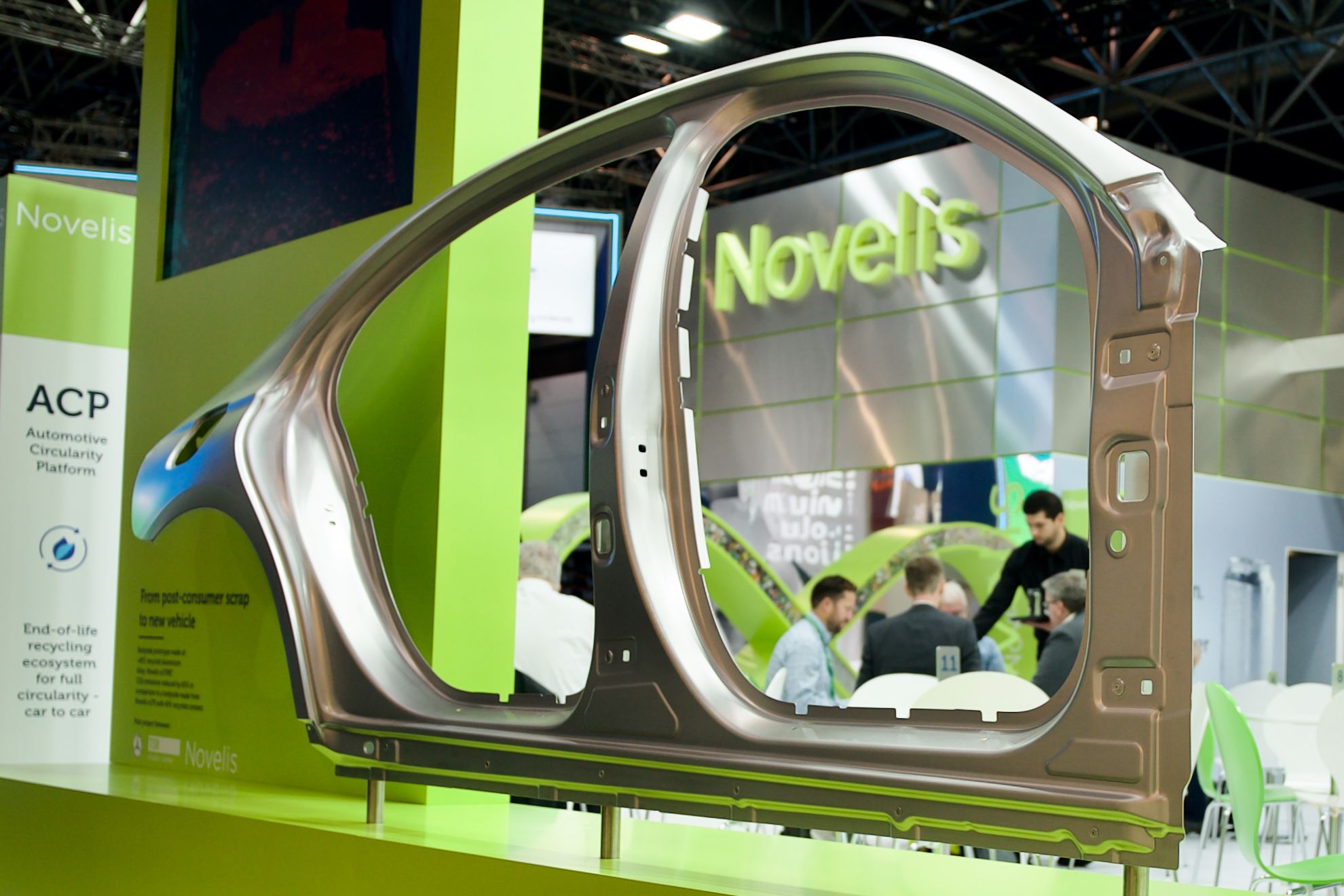
100% Recycled Aluminium Automotive Panel
Novelis Deutschland GmbH
Novelis, a major supplier of sustainable aluminium solutions and the global leader in aluminium rolling and recycling, already manufactures aluminium sheets for the automotive industry containing 75% recycled material or more. The low-carbon alloy Novelis Advanz™ 6F - e170RC, developed for body panels, enables components to be produced using up to 100% scrap from end-of-life vehicles. This highlights the potential of a true circular economy in vehicle manufacturing – resource-efficient and future-oriented.
Award winner 2025 in the category »Produkt«»The introduction of recycled aluminium has the potential to significantly reduce the automotive sector’s environmental footprint. The project provides an excellent example of implementing circular economy principles across the value chain and a strong impetus for further developing the European End-of-Life Vehicles Regulation.«
Siddharth Prakash
Michael Hahne
Three questions for Michael Hahne, VP Commercial Novelis Europe
How did the idea for “100% Recyceltes Aluminium Autoblech” first come about?
This project is committed to genuine circularity. Aluminium can be recycled endlessly, and so our mission is to reduce the use of resource-intensive primary materials. Through the Automotive Circularity Platform (ACP), we’ve put in place an innovative value chain that is a first for the industry. Our access to pure end-of-life vehicle scrap inspired us to demonstrate that this recycled aluminium can be used in its entirety as a high-quality material in automotive manufacturing, with no loss of quality.
Were there any breakthrough moments in the course of development? What were the biggest obstacles you faced?
A real highlight was the casting of our first aluminium ingot made entirely from recycled end-of-life vehicle scrap. We sourced the scrap ourselves through the ACP ecosystem, working with recyclers, dismantlers and shredders. Building up this network, along with adapting the casting and rolling processes and fine-tuning the material composition, was the result of years of development work. The enthusiasm of our client as they take their prototype and develop it into a full-scale production model is a wonderful validation of our approach.
What are the next steps for your project as you look to the future?
The next milestone is the start of ongoing deliveries of our 100% recycled aluminium to a major German car manufacturer. Following on from our sheets, which are already made with a large share of recycled material, we are now bringing full circularity to the roads. This will help increase acceptance of highly recycled materials as well as pave the way for them to become the standard. In turn, we can reduce CO₂ emissions in a truly sustainable way and make a meaningful contribution to the transformation of the automotive sector.