AI-Powered Waste Management
Wasteer GmbH
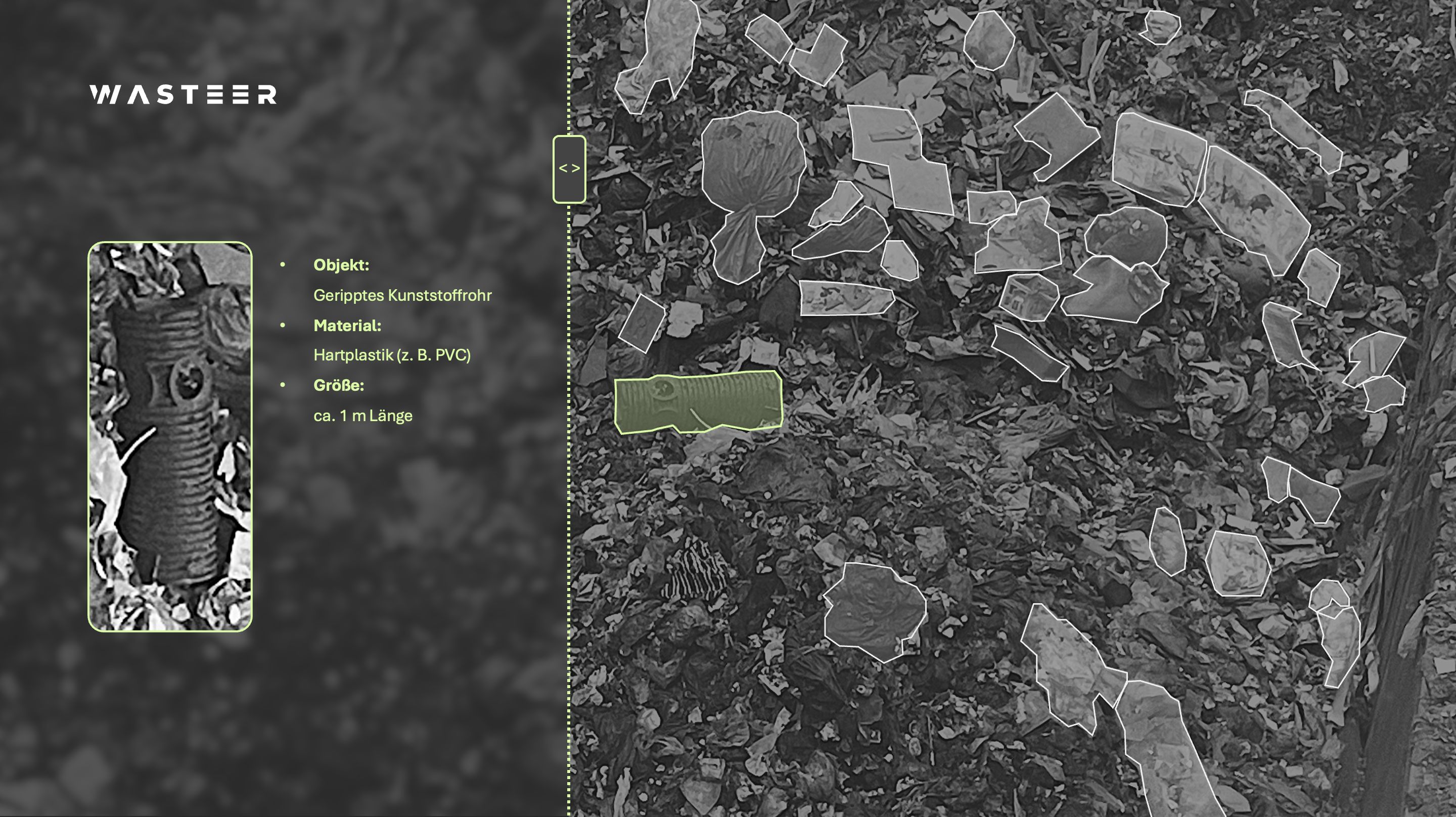
This AI-driven system monitors waste streams the moment they arrive, quickly identifying composition, contaminants, calorific value and other key metrics. When irregularities are detected, automatic alerts are triggered, and all results are documented. The result is a robust data foundation that enables facilities to control waste streams more precisely, recover resources more efficiently and operate more sustainably.
Award winner 2025 in the category »Service«»Waste management is often not very digitised, which makes recycling difficult. A lack of transparency regarding the composition of delivered waste means that some of it is incinerated without being sorted. However, the AI-based platform can efficiently identify recyclable materials and critical contaminants. This increases the recycling rate and improves safety.«
Prof. Matthias Held

Benedict von Spankeren
Three questions for Benedict von Spankeren, founder and CEO
How did the idea for "KI-gestützte Abfallsteuerung" first come about?
Coming from a consulting background, I saw just how much hidden potential there is in waste management. Hardly any digital solutions, enormous sustainability opportunities – and I kept hearing the same thing: “Waste is a black box.” This was something we didn’t want to accept. Our idea was to bring about transparency by using data to understand material flows and improve both efficiency and climate protection.
Were there any breakthrough moments in the course of development? What were the biggest obstacles you faced?
The breakthrough came when our AI achieved what everyone thought was impossible: spotting gas cylinders that can’t even be seen by the naked eye. Scepticism quickly turned into belief, both from our clients and within our own team. Today, my colleagues stand on stage and present Wasteer with pride. The biggest challenge has been building trust in an industry that demands perfection before it can accept innovation.
What are the next steps for your project as you look to the future?
We’re already active in eight European countries and have our sights set on expanding from China to the US. At the same time, we are extending our technology into new sectors: recycling, pre-sorting, and processing. Our goal is to build a lean, dynamic team and create scalable products that make waste management more efficient around the globe.