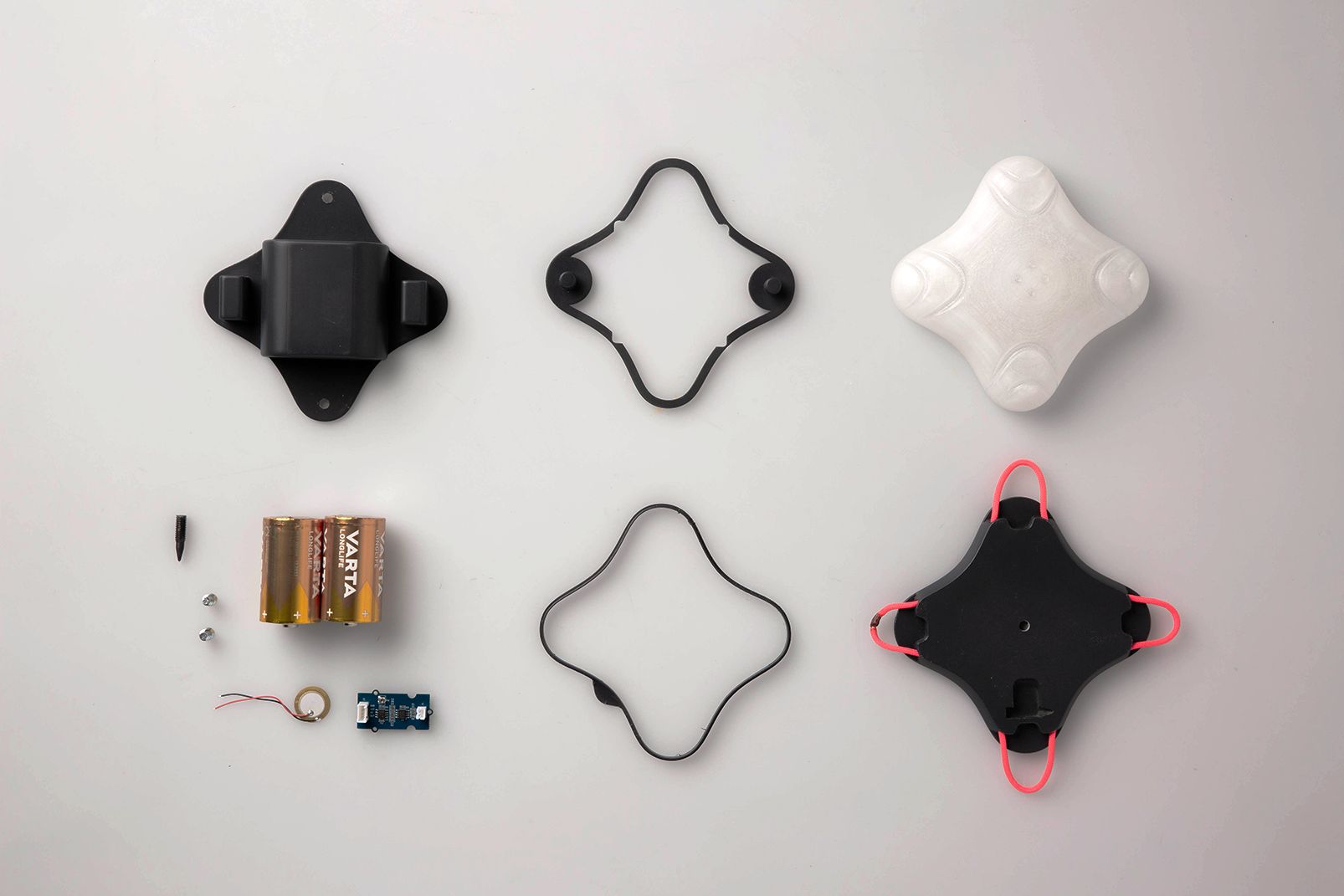
Amber - AI monitoring device
Levin Budihardjo Welim & Emma Rahe | Hochschule für Gestaltung Schwäbisch Gmünd
Amber is an AI-powered, non-invasive device designed for the early detection of bark beetle infestations. Mounted directly on the tree, it records ambient sounds to detect beetle feeding activity in summer and woodpecker activity in winter. By making these seasonal indicators visible, the device gives foresters critical time to remove infested trees, helping to prevent further spread and extensive forest damage. Cutting-edge technology combined with bioacoustics offers a proactive response to the challenges of climate change.
Award winner 2025 in the category »Nachwuchs«»Amber is an AI-powered monitoring system that detects bark beetle infestations acoustically before visible damage occurs. Made from lignin-based bioplastic, the device is well designed, easy to install, low-maintenance, and resource-efficient. This innovative approach gives foresters valuable response time and helps preserve healthy forests.«
Paula Raché
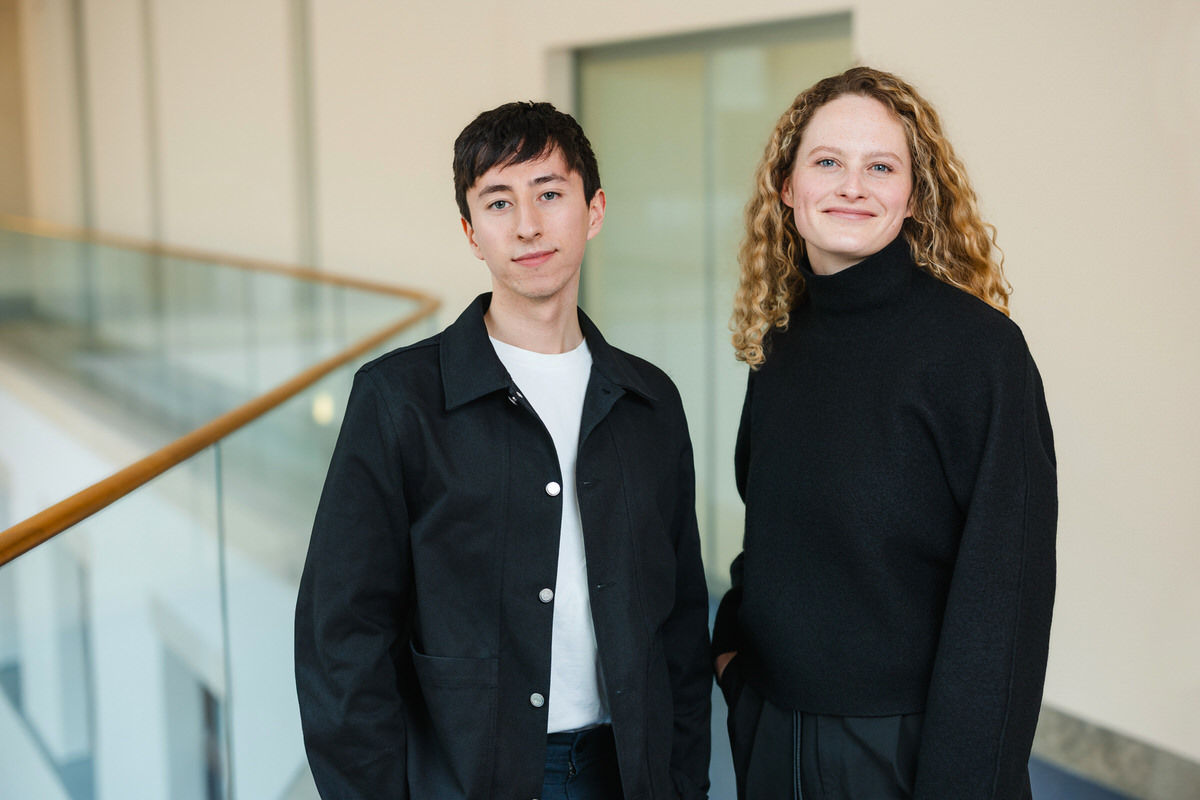
Levin Budihardjo Welim & Emma Rahe
Three questions for Levin Budihardjo Welim and Emma Rahe
How did the idea for "Amber AI" first come about?
The hype surrounding AI in the past few years has sparked countless discussions and led to a host of new tools for designers. With so many different opinions out there, we started asking ourselves how AI could actually help us in product design – not just in coming up with ideas, but in finding real solutions. That was our jumping-off point: we started by looking at the theory and then moved on to practical work.
Were there any breakthrough moments in the course of development? What were the biggest obstacles you faced?
One major challenge was our limited initial knowledge of forests and forestry, which is why we collaborated at an early stage with local foresters in Schwäbisch Gmünd. It was exciting to gain so much hands-on insight, which really helped us shape Amber AI in a practical way. The highlight was that moment when our research finally paid off and we figured out how to detect bark beetles early using vibration and sound. It was especially rewarding to see our technology succeed in the field tests. Throughout, the forestry team’s wire-haired dachshund was another highlight and source of motivation!
What are the next steps for your project as you look to the future?
After the thesis, we continued to work on the topic of AI. Together with the AI+D Lab at HfG Schwäbisch Gmünd, we are now publishing a paper that outlines our project’s methodology and aims to make AI more accessible for designers. We would love to keep developing Amber, but for now, master’s studies and work commitments are keeping us busy. If the chance arises, we would gladly continue, as detecting bark beetles is crucial to strengthening the resilience of our forests in the context of climate protection. We hope our work will create synergies that move this issue forward and demonstrate the environmental potential of this technology.